What Is Non Standard Home Insurance?
Non standard home insurance is specialist cover designed for properties that fall outside the risk criteria accepted by mainstream insurers. When you apply for home insurance through a comparison website or a high-street insurer, the underwriting systems are calibrated for the most common type of UK property: brick-built walls, a pitched tiled or slate roof, occupied throughout the year, with no unusual structural features. If your home doesn't fit this profile, you are likely to be declined, quoted at a prohibitively high premium, or issued with a policy that carries exclusions that render the cover almost meaningless.
A specialist broker such as Performance Direct has access to a carefully selected panel of non standard insurers whose entire business is built around assessing and pricing unusual property risk accurately. This means your home is assessed on its own merits rather than being filtered out by automated systems that were never designed to accommodate it.
Non standard home insurance applies to a wide range of scenarios: properties built with unusual construction materials, homes that have a history of subsidence or structural movement, listed buildings subject to strict planning and reinstatement obligations, thatched or flat-roofed properties, homes undergoing major renovation, and unoccupied properties awaiting sale, probate, or redevelopment. In every one of these situations, specialist insurance isn't a luxury, it is a necessity.
Why this matters for you Buying an inadequate policy because standard insurers won't engage with your property is a significant financial risk. In the event of a claim, a policy with undisclosed exclusions or incorrect reinstatement values can leave you substantially out of pocket. Specialist brokers exist precisely to prevent this outcome.
Types Of Non Standard Homes We Insure
Performance Direct arranges specialist insurance for a wide range of hard-to-insure properties across the UK. Each property type carries its own insurance considerations, and our broking team works to identify the policy that best reflects the genuine risk profile of your home. Browse the categories below to find cover information specific to your property.
Subsidence Home Insurance
Cover for properties with a history of structural movement, settlement, or heave, including those where previous claims have been made.
Listed Buildings Insurance
Specialist reinstatement cover for Grade I, Grade II* and Grade II listed buildings, including historic materials and conservation officer requirements.
Flat Roof Home Insurance
Buildings and contents cover for homes where flat roofing accounts for a significant proportion of the roof structure.
Barn Conversion Insurance
Tailored cover for converted agricultural buildings, which often combine original stone or timber frames with modern fixtures and high rebuild values.
Homes Under Renovation
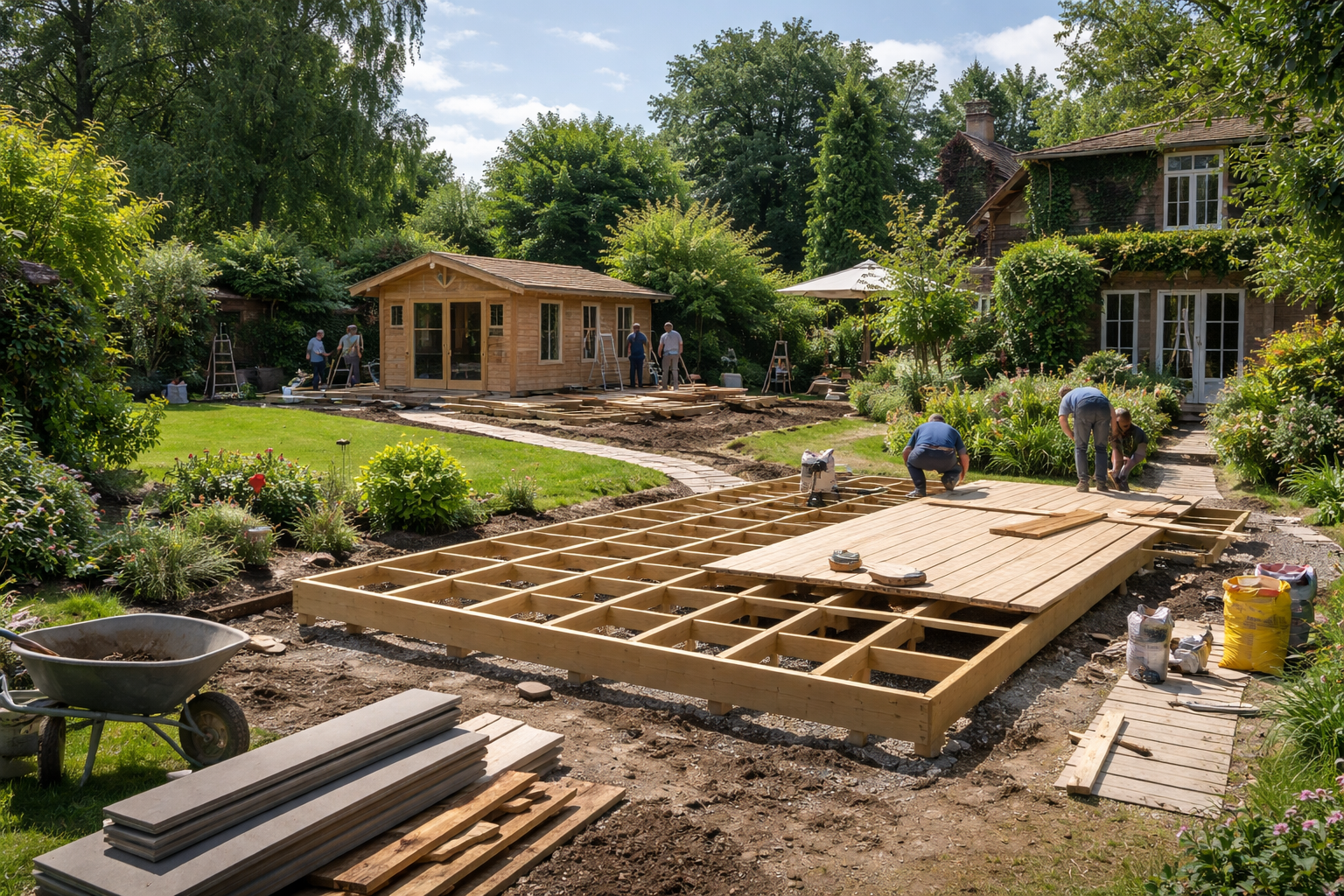
Cover during structural works, extensions, and major refurbishments when standard policies typically lapse or apply restrictive conditions.
Unoccupied Property Insurance
Extended unoccupied property cover for homes vacant due to probate, renovation, sale, or change of circumstances beyond the 30–60 day standard policy limit.
Why Standard Insurers Refuse Some Properties
Understanding why mainstream insurers decline certain properties is central to understanding why specialist brokers exist. High-volume consumer insurers are built on the principle of pooling large numbers of broadly similar risks. Their pricing models, underwriting rules, and claims management systems are designed for the median UK home. Anything that deviates materially from that profile creates uncertainty that their systems are not equipped to price accurately and in insurance, uncertainty typically results in either a refusal or a premium so high as to be commercially unworkable.
The most common risk factors that lead to mainstream refusals include:
Risk Factor | Why Mainstream Insurers Decline | Specialist Solution |
|---|
Unusual Construction Materials | Timber frames, prefabricated concrete panels, steel frames, cob, and adobe all have different fire spread rates, water penetration profiles, and reinstatement costs compared to standard masonry. Standard rebuild calculators are calibrated for brick, not bespoke materials. | Specialist underwriters use surveyor-assessed reinstatement valuations and have experience pricing the actual risk of the construction type. |
Structural Movement & Subsidence History | Any property with a declared subsidence claim, monitoring requirement, or structural engineer's report triggers automated exclusion in most mainstream systems. The perceived tail risk of future movement is priced as prohibitive. | Non standard insurers evaluate the specific cause of movement, whether remediation has been completed, and ongoing monitoring status, pricing the risk properly rather than excluding it wholesale. |
Flat or Non-Standard Roofing | Felt or bitumen flat roofs have higher maintenance costs and shorter lifespans than pitched alternatives. Standard policies often impose flat roof exclusions or impose restrictive warranty conditions. | Specialist policies can include flat roof cover subject to evidence of maintenance, age of the roof covering, and construction specification. |
Vacancy and Unoccupancy | An unoccupied home represents significantly elevated risk: no one to identify a burst pipe, a fire, or a break-in. Standard policies typically restrict unoccupied periods to 30 or 60 consecutive days before cover is voided or heavily restricted. | Specialist unoccupied property insurance provides meaningful cover for extended vacancies, with conditions appropriate to the duration and nature of the vacancy. |
Major Renovation Works | During structural works the property's reinstatement value changes daily. The presence of contractors, open roof structures, and uninhabitable conditions creates a risk profile that standard domestic policies explicitly exclude. | Renovation insurance bridges the gap between a standard home policy and a full self-build policy, covering the property and works in progress. |
Listed Building Status | The reinstatement of a listed property requires specialist contractors, period-appropriate materials, and close engagement with local planning and conservation authorities. The cost per square metre can be significantly higher than a modern property. | Listed building specialists understand the reinstatement obligations and ensure the sum insured reflects the true cost of compliant reinstatement. |
Thatched Roofs | Thatch presents a significantly elevated fire risk and specialist reinstatement requirements. Most mainstream insurers will not quote for thatched properties at all. | Dedicated thatched property underwriters can provide comprehensive cover, often with specific conditions relating to chimney and hearth maintenance, spark arrestors, and smoke detection. |
How Specialist Brokers Arrange Cover
A specialist broker operates very differently from a price comparison website or a direct insurer. When you use a comparison platform, your details are matched against automated underwriting rules. If your property doesn't pass, you receive no quotation, often without explanation.
A specialist broker, by contrast, is staffed by qualified insurance professionals who understand the nuances of non standard risk and have established relationships with the underwriters capable of covering it.
At Performance Direct, the process of arranging non standard home insurance involves several steps that deliver genuine value to policyholders:
1. Risk Assessment and Information Gathering
We take the time to understand the specific characteristics of your property construction type, age, roof specification, any history of claims or structural issues, occupancy status, and planned works. This detail matters: accurate risk information is what allows specialist underwriters to price your cover correctly.
2. Market Access Beyond Comparison Sites
Our panel includes specialist non standard underwriters who do not operate through comparison websites. These are insurers whose business models are specifically designed around unusual property risk. Access to this market is only available through an authorised broker, not direct to the consumer.
3. Policy Accuracy and Sum Insured Adequacy
One of the most significant risks facing owners of unusual properties is underinsurance. We can advise on appropriate reinstatement values, particularly important for listed buildings, thatched properties, and homes built using bespoke or heritage materials where standard rebuild calculators underestimate the true cost.
4. Claims Advocacy
Because we are independent and not owned by an insurer, our obligation is to you, not the underwriter. In the event of a claim, our team works on your behalf to ensure the claim is handled correctly and settled fairly. This advocacy is particularly important for complex non standard properties where claims can be contentious.
5. Ongoing Policy Management
Non standard properties often change over time: renovation works complete, structural issues are remediated, occupancy status changes. We review your policy at renewal to ensure it continues to reflect the current status of your property and that your cover remains appropriate.
Performance Direct: A Chartered Insurance Broker
Chartered Insurance Broker status is the highest professional accreditation available to broking firms in the UK, awarded by the Chartered Insurance Institute. Only approximately 5% of UK broking firms achieve this designation. It requires demonstrable commitment to professional standards, continuous development, and client-first practice. When you arrange specialist home insurance through Performance Direct, you are working with a firm bound by the profession's most exacting standards, not just regulatory minimums. We have also been a proud member of BIBA, the British Insurance Brokers' Association, since 2007.
We Search Our Panel of Leading Specialist Underwriters
We work with a carefully selected panel of specialist and mainstream underwriters to ensure our clients receive the most appropriate terms available in the market. Our non standard home insurance panel includes dedicated specialist insurers alongside some of the UK's most trusted names in property insurance.
Performance Direct searches the specialist market on your behalf. Get a quote today and we will compare cover from multiple specialist insurers likely to quote on your property, including Aviva, Hiscox, Ecclesiastical, Ageas, Covéa, Zurich, NIG, AXA and Allianz, alongside specialist underwriters unavailable on any comparison site.
Get A Quote From A Specialist Broker
If your property has been declined by a comparison site, refused by a mainstream insurer, or you simply need cover that goes beyond the standard market — speak to Performance Direct. Our experienced team arranges specialist non standard home insurance for unusual properties across the UK. We take the time to understand your home, access the right underwriters, and ensure you have the cover you actually need.
For properties that need careful consideration, call us, our team is available Monday to Friday, 9am–5:30pm, and Saturday 9am–1pm. Alternatively, start your quote online and a specialist will follow up.
Understanding Non Standard Home Insurance In Detail
Unusual Construction: What It Means and Why It Matters
The term unusual construction refers to any method of building, or any principal material, that falls outside the standard brick walls with a tiled or slate pitched roof expected by mainstream insurers. In practice, this encompasses a substantial proportion of the UK's housing stock, particularly older homes, rural properties, and those built during the prefabricated construction programmes of the mid-20th century.
Common examples of unusual construction include: timber-framed buildings, where the structural load is carried by a wooden frame rather than masonry; steel-framed properties, often found in commercial-to-residential conversions; prefabricated concrete homes (including a number of post-war system-built types designated as defective under the Housing Defects Act 1984); thatched roofs; flat roofs covering more than a minority proportion of the structure; cob, wattle and daub, or clay lump construction common in traditional rural buildings; and flint or rubble stone construction typical of many older properties in certain regions of England and Wales.
Each construction type creates specific insurance challenges. Timber frames have different fire spread characteristics to masonry. Flat roofs have defined maintenance requirements and shorter covering lifespans. Thatched roofs require specialist contractor knowledge for reinstatement and present higher fire risk. Understanding these characteristics is what allows specialist underwriters to construct appropriate policy terms, rather than simply declining to quote.
Subsidence, Heave, and Structural Movement
Subsidence occurs when the ground beneath a property's foundations moves downward, causing the foundations and potentially the structure above to move. Heave is the opposite movement, where the ground rises. Lateral movement (usually referred to as landslip) is a third category. All three are significant risk factors in property insurance and among the most common reasons for non standard classification.
A property with a previous subsidence claim is almost automatically declined by mainstream insurers. This occurs even where the underlying cause has been fully remediated, works certified by a structural engineer, and no further movement has been recorded. The logic is actuarial rather than scientific: properties with any subsidence history are statistically more likely to experience future movement, and mainstream insurers prefer to exclude that risk entirely rather than price it.
Specialist non standard insurers take a more granular approach. The key factors they assess include: the original cause of movement (clay shrinkage, poor drainage, tree root intrusion, mining legacy), whether the cause has been addressed, the nature of the remedial works (underpinning, drainage improvement, tree removal), and whether any ongoing structural monitoring is in place. A property with a documented, resolved subsidence cause is a very different risk from one with active unresolved movement and specialist underwriters can distinguish between the two.
Listed Buildings and Heritage Properties
Listed buildings occupy a unique position in UK property insurance. Their status under the Planning (Listed Buildings and Conservation Areas) Act 1990 means that any works to the fabric of the building, including reinstatement following a loss, must use appropriate period materials and methods, and may require consent from the local planning authority. This creates a fundamentally different reinstatement cost profile compared to a modern property.
The rebuild cost for a listed building must account for lime mortar rather than modern cement, handmade bricks or dressed stone to match the existing fabric, specialist joinery, and the cost of managing works in compliance with conservation area requirements. Standard rebuild calculators based on BCIS (Building Cost Information Service) rates for conventional construction will routinely undervalue listed buildings, creating a serious underinsurance risk.
Performance Direct works with underwriters who specialise in heritage property insurance and can arrange cover that reflects an accurate reinstatement valuation. For higher-value listed properties, we recommend instructing a specialist building surveyor to produce a formal reinstatement cost assessment before cover is placed.
Barn Conversions and Rural Properties
Barn conversions present a distinctive risk profile that combines heritage construction (stone walls, timber roof structures, often original flagstone or clay tile flooring) with the demands of residential occupancy. They frequently have high rebuild costs per square metre due to the specialist nature of the materials involved, large glazed openings, and open-plan interiors that complicate reinstatement.
Rural location can also influence the insurance position. Properties in areas without a piped mains water supply, or with restricted access for emergency services, may face underwriting questions that urban properties do not. A specialist broker familiar with rural property insurance can navigate these considerations efficiently.
Homes Under Renovation and Self-Build
A standard home insurance policy will typically contain a condition that cover is voided, or significantly restricted, once structural renovation works commence. The reasoning is straightforward: during major works the property's value changes constantly, the risk of fire, theft, and accidental damage rises substantially, and the property may become uninhabitable - removing the natural detection mechanism that occupancy provides.
Renovation insurance bridges the gap between a standard home policy and the more comprehensive self-build cover required for ground-up construction. It typically covers the existing structure and its contents, the value of materials on site, employer's liability (if you are engaging contractors directly), and, in some cases, the additional cost of alternative accommodation if you cannot live in the property during works. The level of cover required depends heavily on the scope of works - a new kitchen extension is a very different proposition from a full structural conversion.
Unoccupied Property Insurance
Unoccupied property is one of the most common triggers for mainstream insurance difficulties. The typical definition in a standard home policy is that a property is considered unoccupied if it has not been lived in for more than 30 or 60 consecutive days. Beyond that point, many standard policies either become void or apply such restrictive conditions (turning off water at the mains, weekly inspections, no cover for certain perils) as to provide minimal genuine protection.
Properties become unoccupied for many reasons: the owner has moved into care, the property is in probate, a gap between tenancies has extended, or the property is awaiting planning permission or renovation works. In every case, the property still requires adequate insurance protection. Specialist unoccupied property insurers understand these scenarios and can provide meaningful cover for extended vacancy periods, typically six to twelve months, sometimes longer, with conditions appropriate to the risk.
Do You Need Specialist Cover?
You may need non-standard insurance if your property or circumstances include any of the following:
Listed building (Grade I, II*, or II)
Flat roof (25% or more of structure)
Timber or steel frame structure
Concrete or prefabricated construction
History of subsidence or underpinning
Empty for more than 30-60 days
Located in a high flood risk area
High rebuild value or high-value contents
Used for business, Airbnb, or lettings<
Previous claims, refusal, or cancellation
CCJ, IVA, or criminal conviction
Non Standard Home Insurance Quotes