What Is Barn Conversion Insurance?
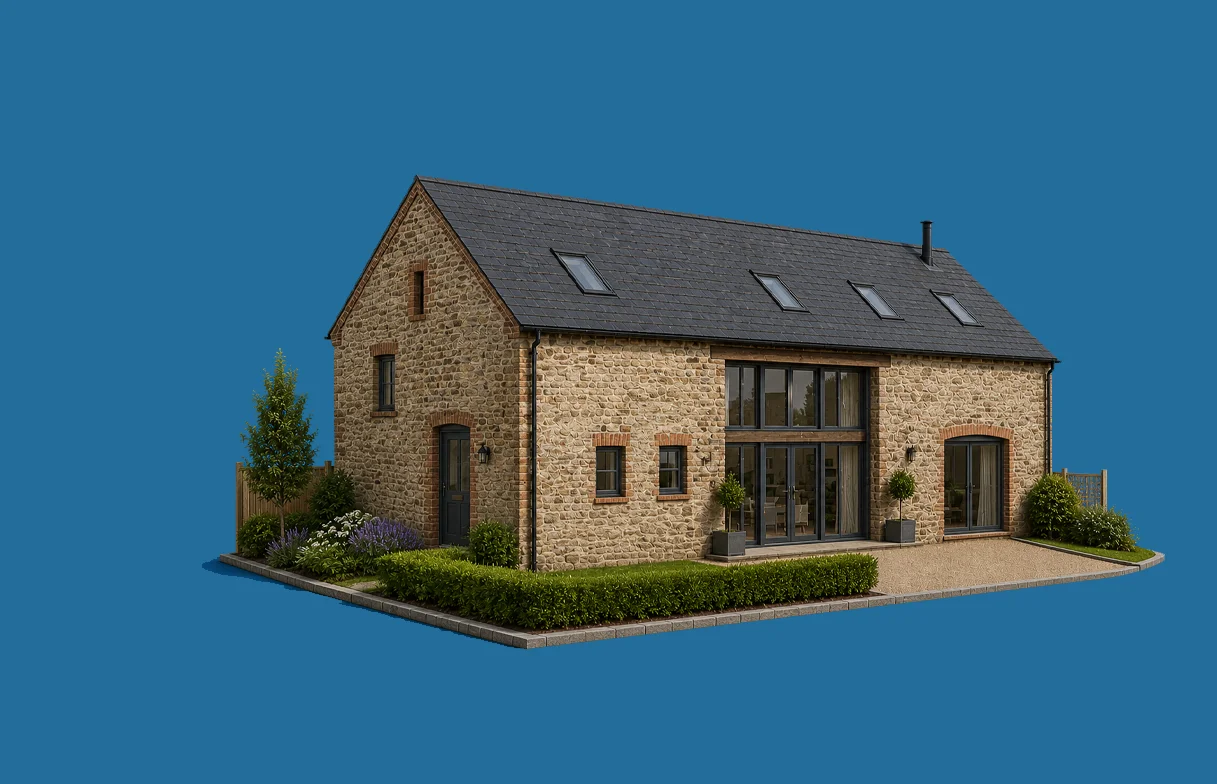
Barn conversion insurance is specialist buildings and contents cover arranged for former agricultural buildings that have been converted for residential use.
No two barn conversions are alike: the original structure may date from the medieval period or the twentieth century; the walls may be solid stone, hand-made brick, flint, or wattle and daub; the frame may be green oak, reclaimed timber, or steel; and the conversion itself may have been carried out to a heritage specification or to modern building regulations with contemporary materials.
This individuality is exactly what standard home insurance cannot accommodate. Standard underwriting systems are built around a clear norm: brick cavity walls, a pitched slate or tile roof, conventional foundations, and modern building regulation compliance throughout.
A barn conversion departs from this norm on almost every dimension. The result, when a barn conversion owner approaches a comparison site, is either a decline, a small number of highly loaded quotes, or a policy with exclusions that specifically remove cover for the elements that make a barn conversion what it is.
Why comparison sites cannot quote for barn conversions
Comparison sites operate automated underwriting flows: inputs go in, insurer APIs respond. Those APIs are calibrated for standard residential construction.
When the inputs include stone walls, timber frame, exposed beams, cruck structure or oak frame, the APIs either return no result or apply blanket non-standard loadings that do not reflect the actual risk of the specific property.
The specialist underwriters who insure barn conversions do not participate in comparison site panels at all. Accessing them requires a broker with the right relationships and the professional knowledge to present the risk accurately.
The Three Principal Types of Barn Conversion in the UK
Barn conversions in the UK fall into three main structural categories, each defined by how the original agricultural building carried its load.
Understanding which category applies to your property is one of the first questions a specialist underwriter will ask, because each structural type carries a different repair cost profile and different considerations for building movement and structural maintenance.
Cruck Framed
Oldest structural type
Cruck framed barns use pairs of curved or angled timber blades rising from low on the walls to meet at the roof ridge, forming an A-frame that carries both the roof and the wall loads simultaneously.
These are typically the oldest surviving barn structures, many dating from the medieval period. The cruck blades are often irreplaceable heritage timbers.
Insurers assess the age and condition of the cruck frame, the difficulty of sourcing equivalent replacement timber, and whether conservation conditions apply to the structure.
Box Construction
Four wall load-bearing
Box construction barns use their four walls to carry the entire structural load of the roof.
This is the simplest structural form and the one closest to standard residential construction in principle, though the materials used (stone, hand-made brick, flint) remain non-standard.
The condition and thickness of the walls, the quality of any previous pointing or repointing, and the nature of the roof structure are the primary underwriting considerations. Walls without a cavity may be more susceptible to damp penetration.
Post and Truss
Internal frame supports roof
Post and truss barns use a series of vertical timber posts rising from the floor and joined at the top by a truss structure, which then carries the roof independently of the external walls.
This structural form allows for large, open interior spaces that are highly sought after in residential conversions.
The post and truss frame itself is the critical structural element: underwriters assess the species and condition of the timber, the joinery at the truss connections, and whether any structural movement has occurred in the frame.
Construction Features That Affect Barn Conversion Insurance
Beyond the structural frame type, specialist underwriters assess a comprehensive range of construction features. Disclosing these accurately at the time of application is essential: the accuracy of your disclosure determines both the adequacy of the cover provided and the validity of any future claim.
Construction feature | Typical in barn conversions | Insurance consideration |
|---|
Oak or green oak frame | Very common in converted barns, particularly post and truss and cruck structures | Oak is expensive to source and requires specialist joiners for repair. Underwriters assess the age and condition of the frame. A well-maintained oak frame in a properly converted barn is insurable at appropriate specialist terms, but the repair cost premium over standard timber must be reflected in the sum insured declared. |
Stone walls (solid, no cavity) | Very common, particularly in older rural barns | Solid stone walls have no cavity insulation and may be more susceptible to damp ingress. Repairs require stone matching the original material and skilled traditional masons. Underwriters consider the stone type, the quality of pointing, and any evidence of previous damp or structural movement. |
Flint or mixed flint/brick | Common in East Anglia, Sussex, and parts of the South East | Flint work is a specialist skill with very few qualified craftspeople available. Repair costs are high and source material requires careful matching. Listed flint barns attract further conservation requirements on repair specification. |
Large glazed spans and roof lights | Common in modern barn conversions seeking to maximise natural light | Large glazed areas increase heat loss risk (frost damage), security exposure, and repair cost. Bespoke glazed structures are significantly more expensive to repair or replace than standard windows. Underwriters assess the design and specification of glazed elements. |
Structural Insulated Panels (SIPs) | Used in some more recent barn conversions for infill panels | SIPs fall outside the standard brick-block model but are well understood by specialist underwriters. The fire risk profile of SIPs depends on whether they are fully clad and fire-rated. Disclosure of SIPs construction is required. |
Original roof timbers retained | Common in heritage-sensitive conversions | Original roof timbers may be of limited dimensions by modern standards. Underwriters will ask whether any structural engineering assessment has been carried out, and whether the timbers have been treated for timber-boring insect activity. |
Rural and isolated location | The majority of barn conversions are in rural settings | Isolated properties are more vulnerable to theft, vandalism and opportunistic break-ins due to limited natural surveillance. Response times for emergency services are longer. Underwriters typically require higher security standards for rural properties and may apply specific conditions around alarm systems and visit frequency. |
Barn Conversions with Listed Building Status
A significant proportion of barn conversions in England and Wales hold listed building status. Older barns, particularly those of medieval or early post-medieval origin, are routinely listed at Grade II and in some cases Grade II* or Grade I. This is relevant to insurance in two distinct ways.
First, the physical fabric of the building is legally protected. Any works to the structure, including repair and reinstatement following an insured event, must comply with the requirements of the Planning (Listed Buildings and Conservation Areas) Act 1990. Listed Building Consent is required before most repair works can begin.
The materials and methods used for repairs must be appropriate to the building's listed status, which typically means using traditional lime mortar, matching stone or brick, and heritage-qualified tradespeople rather than modern repair products and general contractors.
Second, the combination of listed status and non-standard agricultural construction creates a dual specialist requirement that the standard insurance market cannot assess.
A standard insurer's system sees non-standard construction and declines. A semi-specialist insurer may cover listed buildings but apply standard repair cost assumptions that do not reflect agricultural heritage construction. Only a specialist underwriter with experience in both listed buildings and barn conversions can accurately assess and price the risk.
What insurers require for listed barn conversions
Specialist underwriters covering a listed barn conversion will ask for: the listing grade and any known restrictions imposed at the time of listing; details of the original structure and any conversion works carried out; confirmation of whether Listed Building Consent was obtained for the conversion; the materials used in the conversion (particularly any that may be non-compliant with conservation requirements); and whether the building is situated within a conservation area as well as being individually listed.
Our bespoke online quote system collects this information to allow us to match your property with the appropriate underwriters.
Listed Barn Conversion: What the Policy Must Cover
A specialist policy for a listed barn conversion should cover all of the following that standard policies omit: reinstatement using materials appropriate to the listed status and building type; the cost of obtaining Listed Building Consent before repair works commence; specialist heritage craftspeople and materials at appropriate rates; and any additional conditions imposed by the local planning authority on the reinstatement specification.
The sum insured must reflect the true cost of rebuilding the specific structure using the required materials and methods, not a standard rebuilding cost calculator figure. Insurers will confirm the appropriate sum insured based on the property details provided; owners should ensure the figure they declare reflects the genuine rebuild cost of their specific barn, not its purchase price or market value.
What Specialist Barn Conversion Insurance Covers
A specialist policy for a converted barn covers the property on the basis of its individual construction and risk profile. The following is what a properly structured specialist barn conversion policy will typically include, always check your policy details to see precisely what is included.
Buildings damage from fire, storm, flood, escape of water, theft, malicious damage, subsidence, landslip and heave - all assessed with knowledge of the barn's specific construction
Repair and reinstatement using materials appropriate to the construction type, including heritage materials for listed properties
Listed Building Consent costs and associated professional fees where the property holds listed status
Alternative accommodation while the property is uninhabitable following an insured event, at realistic timescales for non-standard construction
Contents cover for furniture, fixtures and personal possessions in a combined buildings and contents policy
Property owners' liability cover, essential where visitors (contractors, estate agents, guests) are present
Outbuildings and ancillary structures within the curtilage, subject to policy schedule
Home emergency cover for urgent uncontrolled leaks, power failures and similar events
What specialist barn conversion policies do not cover
Policies specifically exclude: gradual deterioration and wear and tear; damage resulting from faulty original design, workmanship, or materials at the time of conversion; damage that existed prior to the policy start date; and works carried out without the required consents on listed properties.
Disclosure of the conversion history, builder competence, and any pre-existing defects is critical. Policies are placed on the basis of the information provided; inaccurate or incomplete disclosure can affect the validity of a claim.
Security Requirements for Rural Barn Conversions
The rural setting that makes a barn conversion so desirable creates a specific security challenge that mainstream insurance does not address. Isolated properties are more vulnerable to targeted theft, opportunistic break-ins, and metal theft (copper pipework, lead flashing, aluminium frames).
Emergency service response times in rural areas are significantly longer than in urban settings. Underwriters assess rural barn conversions more carefully on security than equivalent urban properties.
Most specialist barn conversion policies will require, as a minimum: five-lever mortice deadlocks conforming to BS 3621 on all external doors (or equivalent multipoint locking on UPVC or composite doors); key-operated locks on all accessible windows; and a working intruder alarm.
For more remote properties, underwriters may require a monitored alarm system as a policy condition, and some will specify minimum standards for outbuilding security where significant contents are stored.
Security measures that can improve your insurance terms
Beyond the minimum conditions, the following measures are viewed favourably by specialist underwriters and can contribute to better premium terms: a monitored alarm system (bells-only alarms are considered less effective in rural settings); CCTV covering entry points and outbuildings; secure secondary glazing or window film on exposed glazed areas; good perimeter fencing or planting that channels approach to the property; and strong relationships with neighbours who can observe the property.
Inform your insurer or broker of any security improvements made after the policy incepts, as these may support a premium reduction at renewal.
The Sum Insured: Getting the Right Figure for Your Barn
Barn conversions present a particular challenge when it comes to establishing the right buildings sum insured. The rebuild cost of a converted barn is almost always higher than its market value, sometimes significantly so, because the specialist materials and heritage-qualified labour required to reinstate non-standard construction cost more than equivalent standard residential rebuilding work. Stone, oak frame, flint and specialist roofing materials all attract significant premiums over standard brick and tile. Bespoke glazing systems are expensive to match and replace.
Insurers require an accurate sum insured based on the true cost of rebuilding the property. As a Chartered Insurance Broker, Performance Direct will always remind clients of the importance of ensuring the sum insured reflects the genuine rebuild cost of their property, not the purchase price or market value. For barn conversions, owners are encouraged to consider commissioning a specialist survey from a RICS-qualified surveyor with experience in non-standard construction to establish an accurate rebuild figure. Insurers can also provide guidance on appropriate rebuild values based on the construction details provided.
Important: insure for rebuild cost, not market value
A common and potentially costly error is to insure a barn conversion for its market value or purchase price. The market value of a rural barn conversion reflects land, location and the desirability of the property to buyers.
The rebuild cost reflects the actual cost of sourcing the materials and specialist labour needed to construct the building from scratch. For most barn conversions, particularly those in stone or oak frame, the rebuild cost substantially exceeds the market value.
Insurers will ask you to confirm the rebuild cost at the time of application. If you are uncertain, seek guidance from your insurer or a qualified surveyor rather than defaulting to the purchase price.
How Performance Direct Arranges Barn Conversion Insurance
Collecting the key information about your property
Performance Direct operates a bespoke online quote system for non-standard home insurance that collects the key information specialist underwriters need to assess a barn conversion: structural frame type, wall construction and materials, roof type, listed building status and grade, location, conversion history and when works were completed, security arrangements, and intended use. The more accurately this information is provided, the more precisely we can match the risk to the right underwriters.
Preparing the quote with specialist underwriters
In many cases a follow-up call with one of our team is the best way to finalise the details and prepare appropriate quotes. Barn conversions vary enormously and some construction details benefit from a brief conversation to clarify before approaching underwriters. Our team will identify the specialist insurers from our panel whose underwriting appetite and product terms best match your property's specific profile.
Explaining the policy terms clearly
Specialist barn conversion policies include conditions that require active management: maintenance obligations, security standards, notification requirements for any planned works, and in the case of listed properties, compliance with conservation requirements. We explain every condition before you commit so there are no surprises at claim time.
Ongoing support as your property and circumstances change
Barn conversions are living properties: owners undertake further works, add outbuildings, change use, or may need to leave the property unoccupied for a period. Any material change to the property should be notified to your insurer. Our team is here to advise on how changes affect your policy, and to ensure the cover remains appropriate throughout your ownership of the property.
Supporting you in the event of a claim
As your Chartered Insurance Broker and BIBA member, Performance Direct will fulfil all professional obligations to assist you in the event of a claim. This includes helping you understand the claims process, ensuring you have the documentation required, and liaising with the insurer on your behalf where appropriate within our professional remit.
Less than 5% of UK broking firms hold Chartered status
Chartered Status and What It Means for Barn Conversion Owners
Chartered Insurance Broker status, awarded by the Chartered Insurance Institute and held by fewer than 5% of UK broking firms, means professional standards of technical competence and fair client outcomes that go beyond the FCA's minimum regulatory requirements.
For a barn conversion owner arranging specialist insurance, this matters in practical terms: our team's knowledge of non-standard construction underwriting, conservation compliance, and the specialist market for heritage properties means the cover we arrange is appropriate for the property, not just the cheapest option that will accept the application.
Under Consumer Duty, we are obliged to ensure the cover meets your needs and that you are not exposed to material underinsurance. For a property as individual as a barn conversion, that professional obligation is the practical difference between cover that functions at claim time and cover that does not.
Start a Quote for Barn Conversion Insurance
Performance Direct's bespoke online quote system collects the key information about your barn conversion to allow us to approach the most suitable specialist underwriters from our panel. For more complex conversions, including listed properties, oak frame structures, or those combining multiple non-standard features, a brief call with our team will help us finalise the quote with the right detail. Our specialist team is available Monday to Friday 9am to 5:30pm and Saturday 9am to 1pm.
Other Non Standard Home Insurance We Arrange
Barn conversions are one of a range of non-standard property types for which Performance Direct arranges specialist cover. If your barn conversion has additional features requiring specialist treatment (listed status, subsidence history, unoccupied periods), our team can ensure all relevant factors are addressed in a single policy.